An America without poverty is possible.
The Georgetown Center on Poverty and Inequality is a research center that generates policy solutions to improve the lives of people experiencing poverty in the United States.
Explore our New Family Economic Well-Being Index!
A new measure of the affordability measures families face.
Our Policy Issues

Good Jobs
Promoting job quality and job creation policies that ensure well-paying, secure jobs with fair benefits and build worker power.
Explore Good Jobs ≫

Public Benefits
Building the case for whole-family, community-centered approaches to food assistance, cash support, and social services.
Explore Public Benefits ≫

Income & Cash
Championing income supports—including cash assistance and tax credits—that help families meet their basic needs and promote economic mobility.
Explore Income & Cash ≫

Care
Designing policies that recognize and fairly compensate caregiving labor, including paid leave.
Explore Care ≫

Housing
Investing in housing as a social good, including solutions that secure stable, affordable housing for all families.
Explore Housing ≫
Latest from GCPI

The Supplemental Nutrition Assistance Program (SNAP) helps put food on the table for tens of millions of people in the United States, especially during times of economic hardship. As a result of H.R. 1, more than 5 million people have lost access to SNAP because of changes that have made it significantly more difficult for eligible families to receive the aid for which they’re eligible. While these cuts have been justified as necessary to fight fraud, this brief explains why targeting SNAP for fraud reduction is misguided and counterproductive.
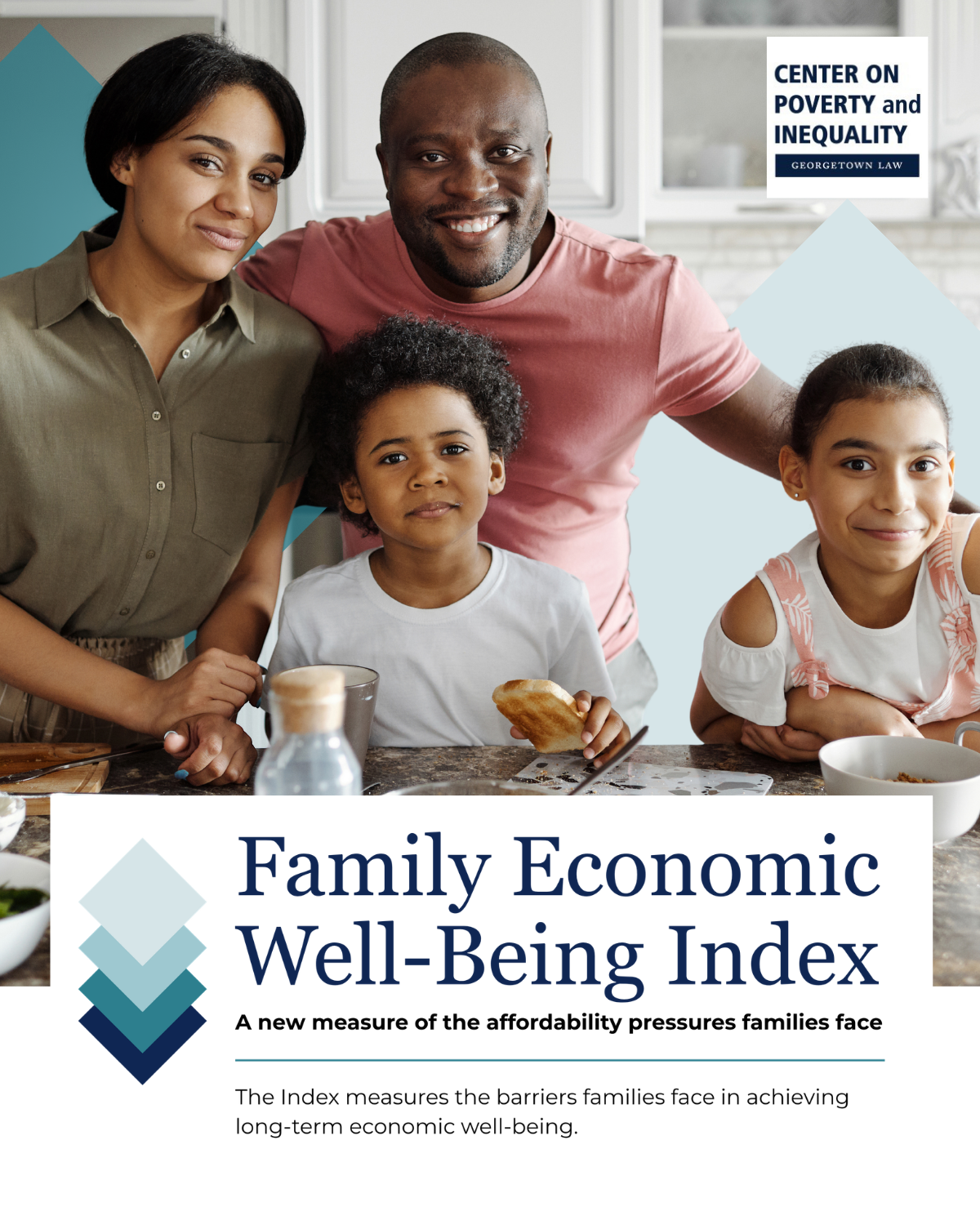
GCPI’s Family Economic Well-Being Index is a new interactive tool that measures the affordability pressures families face in all 50 states and the District of Columbia. Looking beyond traditional poverty measures, the Index examines how much of a household’s income is required to cover housing, food, health care, and child care. By providing a more complete picture of families’ lived financial experiences, these insights give policymakers, researchers, and advocates a stronger foundation for understanding families’ economic security and designing policies that reflect how widely these challenges are shared.
The Family Economic Well-Being Index features an interactive map and national and state-level data by income, age, race and ethnicity, and housing status.

Affordable child care is essential infrastructure that supports families’ economic well-being as well as other economic activity. Without accessible and affordable child care, mothers—especially those with low incomes—face barriers to employment, deepening economic insecurity, and gender inequities. Decades of evidence show child care investments empower families and strengthen the economy.
Drawing on data from the last six years and firsthand accounts, this brief describes how temporary federal investments and expanded remote work options during the pandemic enabled record-breaking labor force participation among mothers—but also how the expiration of these supports has caused many women to fall back out of the work force, especially Black mothers. The piece underscores the importance of child care as a foundational economic policy and calls for meaningful action to enable women to make choices about work and caregiving without being constrained by structural barriers. By illustrating the continued gaps and the urgent need for robust investment in child care infrastructure to support women, especially those with young children, the brief aims to inform policymakers and inspire changes that promote equity and opportunity for all families.

The Child Tax Credit (CTC) and Earned Income Tax Credit (EITC) have proven effective at reducing poverty and narrowing racial and gender disparities, especially for women of color and children in low-income households. However, in 2025, H.R. 1 expanded benefits for higher-income families while restricting access and reducing benefits for many low-income and immigrant families. As a result, millions of children — particularly children of color, in large families, or in rural areas — were excluded from receiving the full CTC, despite evidence that the credits support family well-being and alleviate poverty.
Co-authored by the National Women’s Law Center and the Georgetown Center on Poverty & Inequality, this brief makes the case for expanding the Child Tax Credit and reversing the restrictive provisions of H.R. 1 to build on the success of the 2021 American Rescue Plan Act, which temporarily made the credit fully refundable and widely accessible, resulting in historic reductions in child poverty. It highlights research showing that expanding the CTC provides not only immediate relief for families but also long-term societal benefits, including improved health, higher earnings, and reduced crime. Recommendations include expanding the Child Tax Credit to reach up to 19 million more families, strengthening the IRS’s capacity to deliver these credits equitably, and restoring funding for vital programs like Medicaid and SNAP through increased and equitable tax revenue.
The People-Centered Digital Benefits Project is grounded in the belief that real progress towards people-centered digital benefits delivery depends as much on how government agencies are structured and led as on the technology they use. The Project launched in September 2025 to explore how states are reimagining the delivery of public benefits systems that too often leave people feeling frustrated and defeated, rather than supported. This final blog summarizes the lessons learned from the four states profiled over the course of the project—Massachusetts, New York, Maryland, and Colorado—and finds the most impactful investments were not in platforms or contracts, but in skilled professionals who had the influence and expertise to drive real change.